

Best Pre-Roll Machines for Cannabis Production
Choosing the right pre-roll machine can dramatically improve production efficiency, consistency, and profitability. This guide compares manual, semi-automatic, and fully automated cannabis pre-roll equipment to help cultivators, processors, and manufacturers select the ideal solution.
- Commercial Grade Equipment
- Consistent Fill Weights
- Increased Production Capacity
- Reduced Labor Costs
What Is the Best Pre-Roll Machine for Cannabis Production?
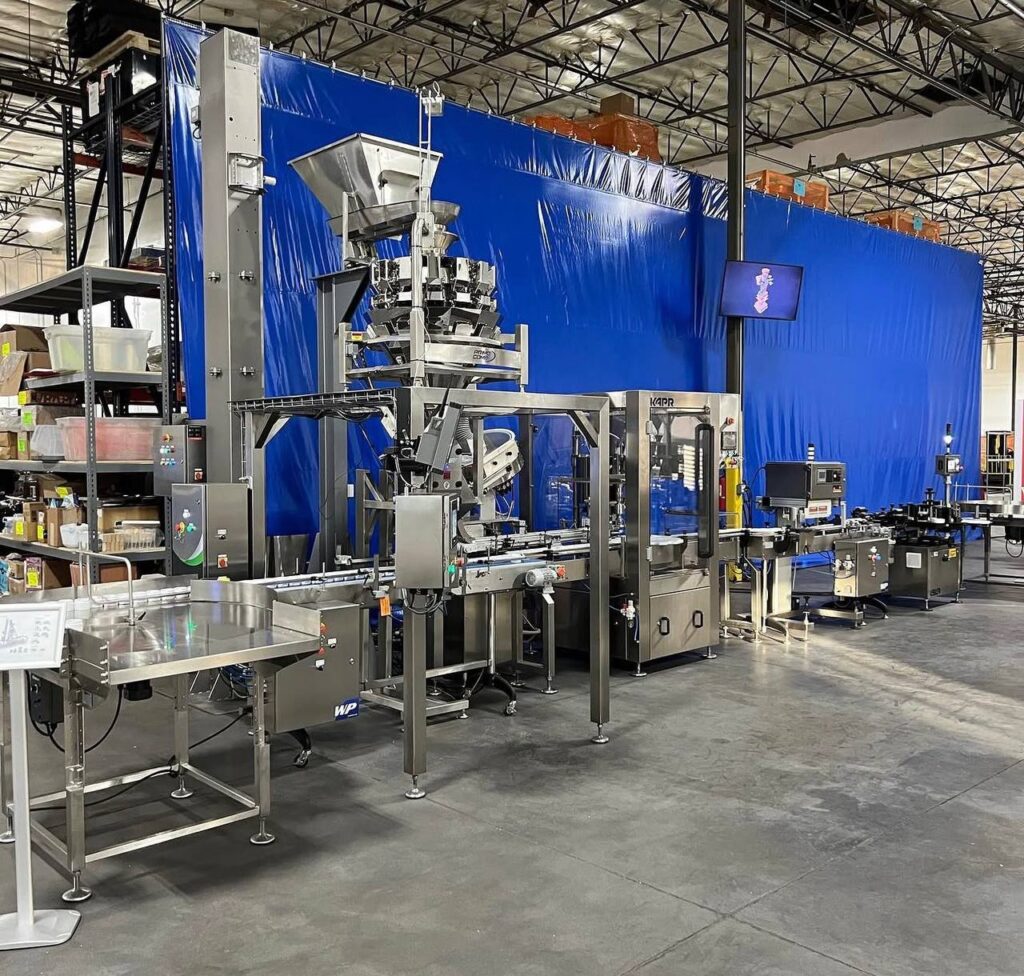
The best pre-roll machine depends on production volume, labor availability, and desired automation level. Small producers often benefit from semi-automatic systems that balance affordability and output, while commercial manufacturers typically require fully automated pre-roll equipment capable of producing thousands of consistent pre-rolls per shift.
For businesses seeking scalable production, machines that integrate grinding, cone filling, weighing, and packing processes provide the highest efficiency and consistency.
Why Cannabis Businesses Invest in Pre-Roll Automation
Consistent Fill Weights
Maintain uniform product quality and compliance.
Faster Production
Produce significantly more units than manual rolling.
Reduced Labor Costs
Minimize repetitive manual tasks.
Scalable Manufacturing
Increase output as demand grows.
Types of Cannabis Pre-Roll Machines
Manual Pre-Roll Systems
Best For:
- Startups
- Small batch producers
Advantages:
- Lowest investment
- Simple operation
Limitations:
- Labor intensive
- Lower throughput
Semi-Automatic Pre-Roll Machines
Best For:
- Growing businesses
- Mid-scale production
Advantages:
- Better consistency
- Increased speed
- Reduced labor
Limitations:
- Moderate investment
Fully Automated Pre-Roll Machines
Best For:
- Commercial manufacturers
- Large-scale operations
Advantages:
- Maximum throughput
- Consistent quality
- Minimal labor
Limitations:
- Higher capital investment
Pre-Roll Machine Capacity Comparison
| Machine Type | Production Volume | Best For |
|---|---|---|
| Manual | 50–200 Pre-Rolls/Day | Small Operators |
| Semi-Automatic | 500–2,000 Pre-Rolls/Day | Commercial Brands |
| Fully Automated | 5,000+ Pre-Rolls/Day | Industrial Production |
How to Choose the Right Pre-Roll Machine for Your Cannabis Business
Investing in a pre-roll machine is about far more than increasing output. The right system should improve product consistency, reduce labor costs, support future growth, and integrate seamlessly into your overall production workflow. While many businesses initially focus on machine price, experienced operators understand that long-term efficiency, reliability, and scalability often have a far greater impact on profitability.
Before purchasing a pre-roll machine, evaluate your production goals, staffing requirements, facility constraints, and product portfolio. The most expensive machine is not always the best choice, and the cheapest option often becomes the most costly when labor, downtime, and inconsistency are factored into the equation.
1. Determine Your Current and Future Production Volume
Production capacity should be the starting point for any equipment decision. A machine that is too small will quickly become a bottleneck, while an oversized system may result in unnecessary capital expenditure.
Ask yourself:
- How many pre-rolls do you currently produce per day?
- What production volume do you expect within the next 12–24 months?
- Are you supplying a single retail location or multiple markets?
- Will your business be introducing new product lines such as infused pre-rolls or multi-pack offerings?
For boutique operators producing a few hundred units per week, a semi-automatic system may provide sufficient capacity. However, businesses planning regional distribution often benefit from investing in equipment capable of handling significantly larger production volumes from the outset.
A properly sized machine should comfortably accommodate projected growth while maintaining operational efficiency and minimizing labor dependency.
2. Evaluate Labor Costs Versus Automation
One of the primary reasons cannabis businesses invest in pre-roll automation is to reduce labor-intensive manual processes.
Manual filling methods often require multiple employees to:
- Grind material
- Fill cones
- Weigh products
- Pack finished units
- Perform quality control
As production volume increases, labor costs rise proportionally. Automated and semi-automated systems reduce this burden by standardizing repetitive tasks and improving overall throughput.
When evaluating equipment, consider:
- Current labor expenses
- Staff availability
- Training requirements
- Production consistency
- Employee turnover costs
In many cases, higher-end automated systems deliver a faster return on investment than lower-cost equipment due to substantial labor savings over time.
3. Prioritize Fill Weight Accuracy and Product Consistency
Consumers expect every pre-roll in a package to provide the same experience. Inconsistent fill weights can negatively impact customer satisfaction, compliance requirements, and brand reputation.
The best pre-roll machines are engineered to maintain:
- Consistent fill weights
- Uniform density
- Reliable airflow
- Even burn characteristics
Look for systems capable of producing repeatable results across large production runs. Even small weight variations become significant when manufacturing thousands of units per month.
Quality-focused operators should view consistency as a critical business metric rather than simply a machine feature.
4. Match the Machine to Your Product Portfolio
Not all pre-rolls are created equal. Different products often require different equipment capabilities.
Consider whether your operation produces:
- Standard flower pre-rolls
- Mini pre-rolls
- Infused pre-rolls
- Hash-infused products
- Multi-pack products
- Specialty cone sizes
A machine that performs exceptionally well with traditional flower may require modifications or additional accessories when processing infused materials or alternative cone formats.
Choosing equipment with flexibility can reduce future upgrade costs and allow your business to respond quickly to changing consumer demand.
5. Consider Material Preparation Requirements
Even the most advanced pre-roll machine cannot compensate for poor material preparation.
Consistent pre-roll production begins with:
- Proper drying and curing
- Uniform grinding
- Correct moisture content
- Removal of oversized stems and debris
For this reason, many successful manufacturers pair their pre-roll systems with commercial cannabis grinders and post-harvest processing equipment.
A complete workflow often includes:
The quality of your input material directly influences machine performance, fill consistency, and final product quality.
6. Assess Scalability and Future Expansion
Cannabis markets evolve rapidly. Equipment that meets today’s production needs may become inadequate within a year if demand increases.
When evaluating pre-roll machines, ask:
- Can production capacity be expanded?
- Are additional modules available?
- Can the system support multiple cone sizes?
- Can it integrate with automated packaging systems?
- Does the manufacturer offer future upgrades?
Scalable systems help avoid costly equipment replacement and allow businesses to grow without disrupting established workflows.
Forward-thinking operators invest in equipment that supports where the business is going, not just where it is today.
7. Review Maintenance, Reliability, and Support
Equipment downtime can have a significant impact on production schedules and profitability.
Before purchasing a machine, evaluate:
- Build quality
- Availability of replacement parts
- Technical support
- Training resources
- Warranty coverage
Commercial cannabis production often operates on strict timelines. Reliable equipment supported by responsive technical assistance can prevent expensive disruptions and improve long-term operational efficiency.
The true value of a machine extends far beyond the purchase price and includes years of dependable performance.
8. Understand Total Cost of Ownership
Many buyers focus exclusively on upfront pricing, but the true cost of a pre-roll machine includes:
- Labor costs
- Maintenance expenses
- Production efficiency
- Product waste
- Downtime risk
- Energy consumption
A machine that costs more initially may deliver significantly lower operating costs over its lifetime.
When evaluating equipment, calculate:
- Cost per pre-roll produced
- Labor savings
- Increased production capacity
- Reduced material waste
This provides a much clearer picture of long-term return on investment than purchase price alone.
9. Choose Equipment That Supports Brand Quality
Pre-rolls are often a consumer’s first interaction with a cannabis brand. Poorly packed products, inconsistent weights, and uneven burns can damage customer trust.
Professional-grade pre-roll equipment helps ensure:
- Consistent presentation
- Uniform density
- Reliable smoking experience
- Improved customer satisfaction
For brands competing in premium markets, quality control should remain a central factor in every equipment purchasing decision.
10. Build a Complete Production System, Not Just a Machine
The most efficient cannabis manufacturers do not view pre-roll machines as standalone purchases. Instead, they create integrated production systems designed to maximize efficiency from raw flower to finished product.
A modern pre-roll production workflow often includes:
When all equipment works together as a coordinated system, businesses achieve:
- Higher throughput
- Better product consistency
- Reduced labor costs
- Improved profitability
- Easier scalability
Ultimately, the best pre-roll machine is the one that fits seamlessly into a complete production workflow while supporting your long-term business goals.
Need Help Choosing the Right Pre-Roll Machine?
Whether you’re launching a boutique pre-roll brand or scaling a high-volume manufacturing operation, selecting the right equipment starts with understanding your production requirements. Explore our range of commercial pre-roll machines, cannabis grinders, and complete processing systems designed to help businesses increase efficiency, improve consistency, and scale with confidence.
How Modern Pre-Roll Production Works
Workflow Timeline
Efficient pre-roll production begins with consistent grinding and material preparation. Proper particle size distribution improves cone filling performance, resulting in uniform density and combustion characteristics.
Recommended Pre-Roll Production Equipment

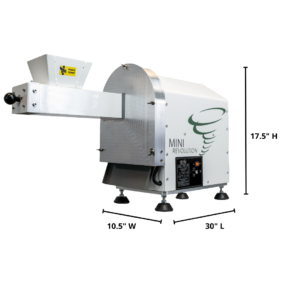


Equipment Commonly Combined With Pre-Roll Machines
Grinder
Creates consistent particle size.
Pre-Roll Machine
Automates filling and packing.
Storage System
Preserves product freshness.
Packaging Equipment
Prepares products for retail distribution.
Compare Leading Pre-Roll Machines
Not all pre-roll machines are designed for the same production goals. Compare automation levels, throughput, cone compatibility, and workflow integration to identify the right solution.
Frequently Asked Questions About Pre-Roll Machines
A pre-roll machine is a cannabis processing machine designed to automatically or semi-automatically fill, pack, and finish pre-rolled cones or joints. Pre-roll machines help producers increase consistency, reduce labor costs, improve weight accuracy, and scale production compared to hand-filling methods.
Most pre-roll machines follow a simple workflow:
- Cannabis flower is ground to a consistent particle size.
- Empty cones are loaded into trays.
- Ground flower is distributed into the cones.
- The machine settles and packs the material.
- Finished pre-rolls are weighed and quality checked.
- Products move to packaging and distribution.
The level of automation varies depending on the machine.
Pre-roll machines offer several advantages:
- Increased production speed
- Consistent fill weights
- Reduced labor requirements
- Improved product quality
- Better scalability
- Lower production costs
- Reduced product waste
For commercial cannabis operations, automation often pays for itself through labor savings and increased throughput.
Yes. Many small and medium-sized cannabis businesses begin with semi-automatic pre-roll machines that significantly increase production without requiring a large investment.
A pre-roll machine can help small operators maintain product consistency while preparing for future growth.
Manual Pre-Roll Machines
Require operators to fill and pack cones by hand using simple filling trays.
Semi-Automatic Pre-Roll Machines
Automate portions of the filling and packing process while requiring some operator involvement.
Automatic Pre-Roll Machines
Handle filling, packing, and production with minimal labor, making them ideal for commercial operations.
Most pre-roll machines perform best with evenly ground cannabis flower.
Overly fine material can restrict airflow, while overly coarse material may cause inconsistent filling and poor burn characteristics.
Commercial grinders are often used to achieve a consistent particle size before pre-roll production.
Yes. A commercial cannabis grinder is one of the most important pieces of equipment in a pre-roll production line.
Proper grinding helps ensure:
- Consistent fill weights
- Better cone packing
- Improved airflow
- More uniform burning
Machines such as industrial cannabis grinders are commonly paired with automated pre-roll systems.
Production capacity varies by machine.
Typical production ranges include:
| Machine Type | Approximate Output |
|---|---|
| Manual | 100–500 per hour |
| Semi-Automatic | 500–2,000 per hour |
| Automatic | 2,000–10,000+ per hour |
Actual production depends on workflow efficiency, staffing, and cone size.
The best machine depends on your production goals.
Businesses producing thousands of pre-rolls daily often choose fully automated systems such as the STM RocketBox PRO, while smaller operations may prefer compact semi-automatic solutions.
The ideal machine balances production volume, labor costs, available space, and budget.
Modern pre-roll machines are designed to produce highly consistent fill weights.
When combined with proper grinding and quality control procedures, many systems achieve excellent weight uniformity across large production batches.
Yes. Many commercial pre-roll machines support multiple cone sizes, including:
- 0.5g cones
- 0.7g cones
- 1g cones
- King-size cones
Some machines require interchangeable trays or tooling to accommodate different formats.
Yes. Most pre-roll machines can process both cannabis and hemp flower, provided the material has been properly prepared and ground.
Many hemp producers use the same production equipment as licensed cannabis processors.
A complete pre-roll production line typically includes:
- Cannabis grinder
- Pre-roll machine
- Cone loading system
- Weight verification equipment
- Packaging machine
- Storage and inventory system
Integrating these systems improves efficiency and product consistency.
When selecting a pre-roll machine, consider:
- Daily production volume
- Available labor
- Facility size
- Budget
- Desired automation level
- Product formats
- Future growth plans
The best machine is one that meets current demand while allowing room for expansion.
Many cannabis businesses see a positive return on investment through:
- Reduced labor costs
- Faster production
- Lower product waste
- Increased consistency
- Higher output capacity
The exact ROI depends on production volume, staffing costs, and machine utilization.
A common commercial workflow is:
Flower Intake → Grinding → Sifting → Pre-Roll Filling → Weight Verification → Packaging → Storage & Distribution
This workflow helps maintain consistency, efficiency, and product quality throughout the production process.
Yes. Automated filling and packing systems help ensure each pre-roll contains a similar amount of material and maintains a consistent appearance, resulting in a more reliable customer experience.
Most operators can learn basic machine operation within a few hours to a few days, depending on the machine’s complexity.
Many manufacturers provide onboarding, documentation, and training resources to help teams get started quickly.
For businesses focused on scaling production, automated systems such as the STM RocketBox PRO are popular because they combine high throughput, consistency, and reduced labor requirements while supporting future growth.
Cannabis producers use pre-roll machines to automatically fill and pack cones with ground flower. Popular options include semi-automatic and fully automatic systems designed for commercial production.
Commercial pre-roll machine pricing varies depending on automation level, production capacity, and features. Entry-level systems cost significantly less than fully automated industrial production lines.
Yes. By reducing labor costs, increasing throughput, and minimizing product waste, pre-roll machines can substantially improve operational efficiency and profitability.
Yes. Automated systems can produce thousands of pre-rolls per hour, allowing cannabis businesses to scale production while maintaining consistency and quality.